
Aminosalicylates
Aminosalicylates
Aminosalicylates
Information included in this Introduction to IBD Medication Classes is for educational purposes only and is intended for US-based healthcare providers (HCPs).
This information does not represent medical advice or endorse any specific product. It should not be the basis for clinical diagnoses or treatment decisions.
Use this information in conjunction with a clinical assessment and independent research from other relevant sources.
This information was last updated 12/2025.
Medication Class Introduction
Aminosalicylates, introduced in the 1940s, were the first class of pharmacologic agents developed for the treatment of inflammatory bowel disease (IBD).1 Their therapeutic effects are attributed to the active compound, 5-aminosalicylic acid (5-ASA).1,2
IBD Treatment Landscape3–13
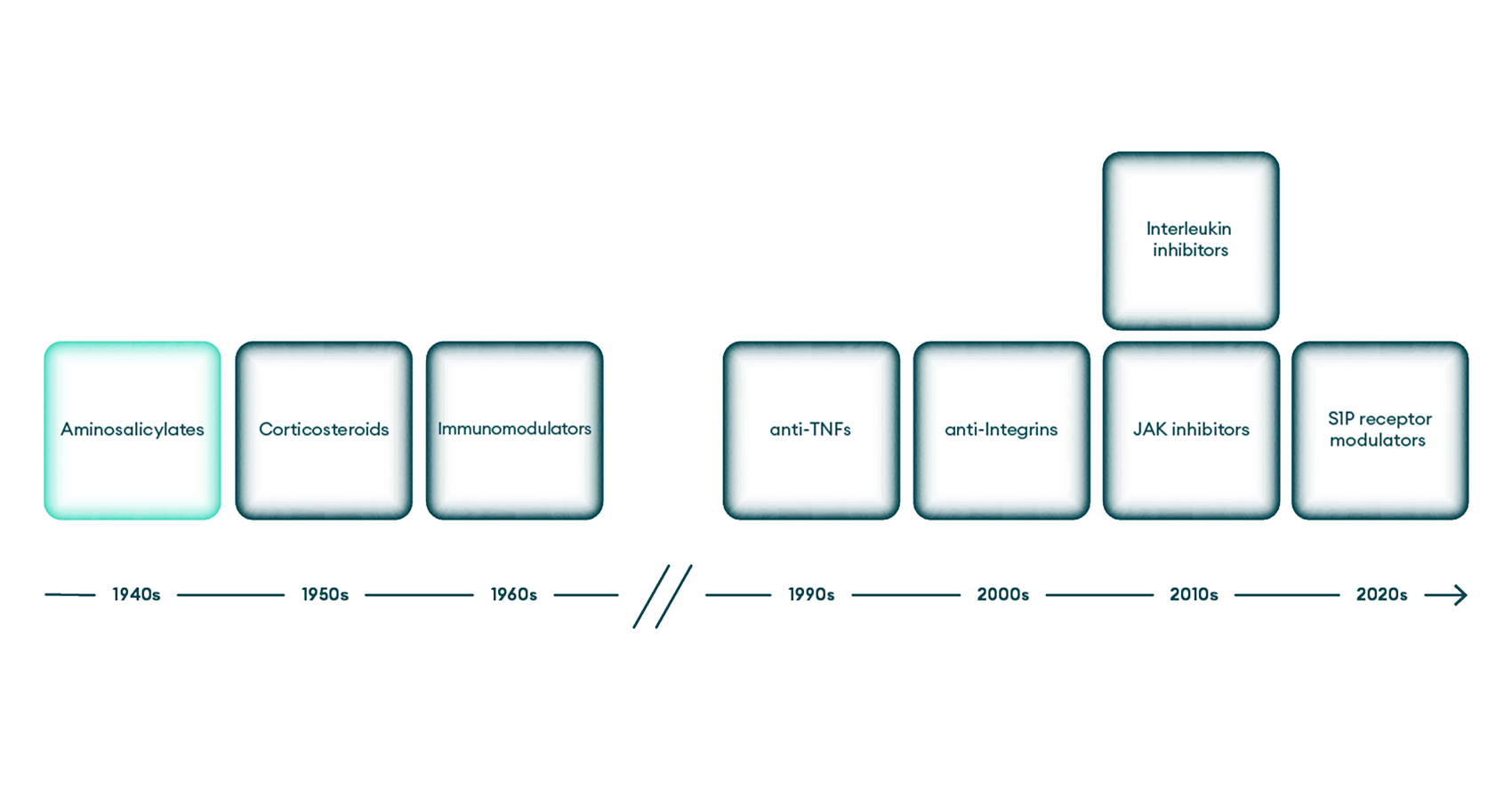
JAK=Janus kinase; S1P=sphingosine-1-phosphate; TNF=tumor necrosis factor.
Role in IBD Pathogenesis
IBD is characterized by increased cytokine production resulting from activation of intracellular signaling pathways.14 This may be partly attributed to decreased activity of the transcription factor peroxisome proliferator-activated receptor gamma (PPARγ), which typically helps regulate some of these signaling pathways.14–16 In individuals with IBD, PPARγ expression may be reduced, potentially leading to dysregulated signaling and elevated cytokine production.14–16
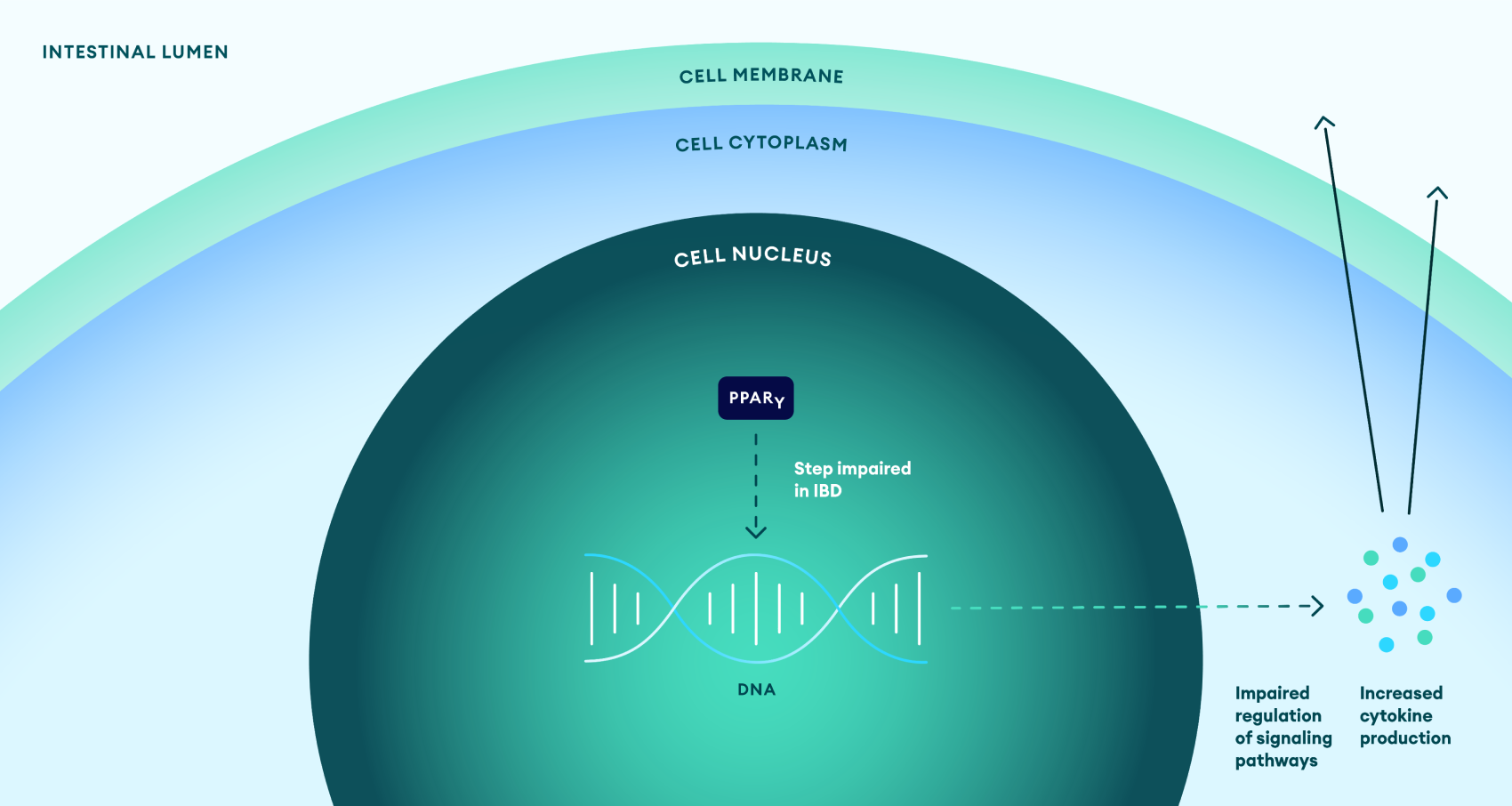
DNA=deoxyribonucleic acid; PPARγ=peroxisome proliferator-activated receptor gamma.
Mechanism of Action in IBD
Following aminosalicylate administration in IBD, 5-ASA is transported from the intestinal lumen into the cytoplasm of intestinal epithelial cells.15,16 Within the cytoplasm, 5-ASA binds to PPARγ, which then translocates to the nucleus.15,16 There, PPARγ forms a complex with the transcription factor retinoid X receptor (RXR) that binds to DNA, initiating transcription of anti-inflammatory genes and subsequently downregulating inflammatory signaling pathways and cytokine production.14–16
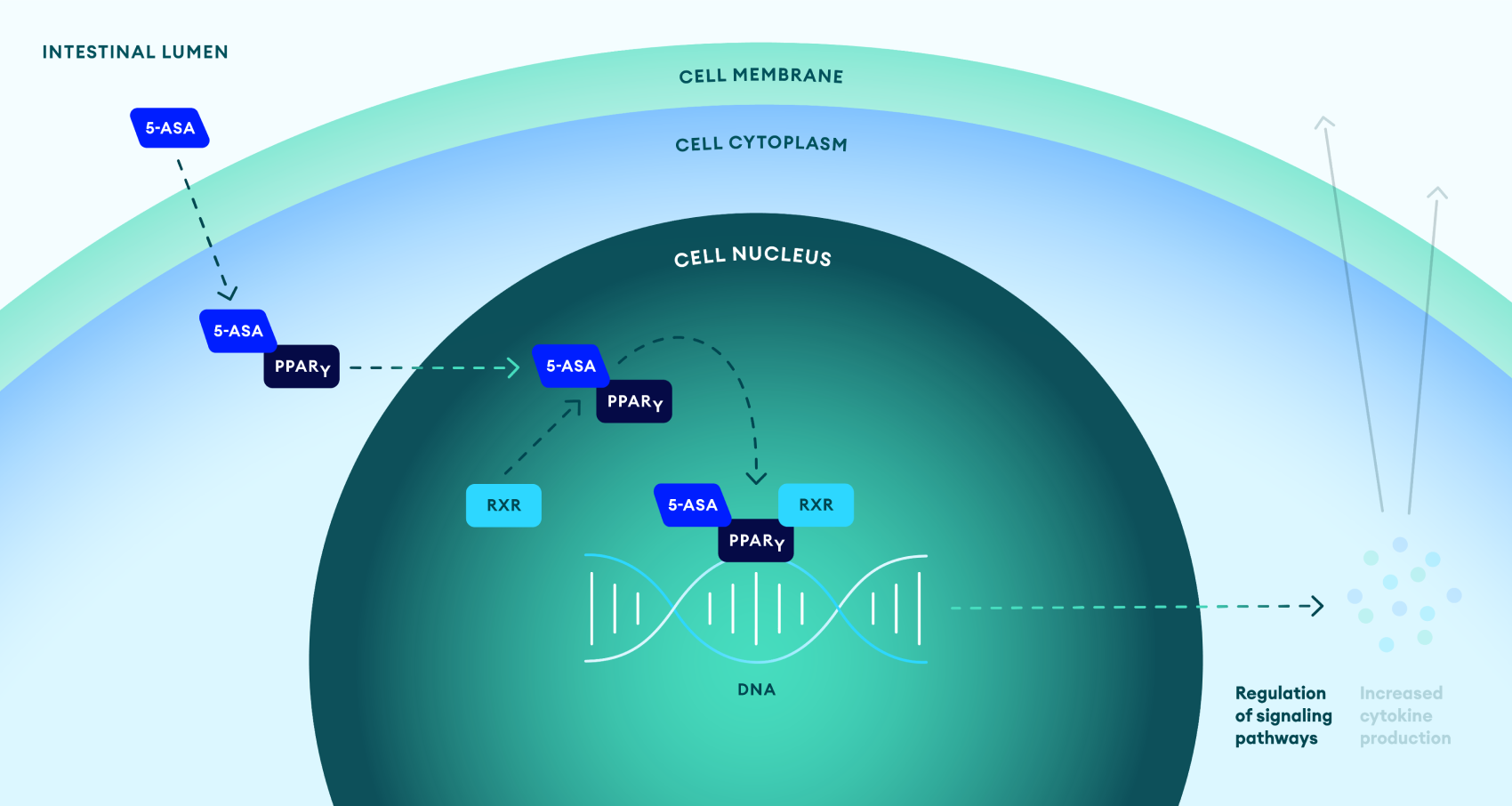
5-ASA=5-aminosalicylic acid; DNA=deoxyribonucleic acid; PPARγ=peroxisome proliferator-activated receptor gamma; RXR=retinoid X receptor.
Resources
Current IBD Treatment Guidelines
Guidelines for managing IBD are available from the American College of Gastroenterology (ACG) and the American Gastroenterological Association (AGA). You can access them through the following links:
- ACG Clinical Guideline: Management of Crohn’s Disease in Adults
- ACG Clinical Guideline Update: Ulcerative Colitis in Adults
- AGA Living Clinical Practice Guideline on the Pharmacologic Management of Moderate-to-Severe Crohn’s Disease
- AGA Clinical Practice Guidelines on the Management of Mild-to-Moderate Ulcerative Colitis
- AGA Living Clinical Practice Guideline on Pharmacological Management of Moderate-to-Severe Ulcerative Colitis
Resources to Help Explain Medication Options for IBD to Patients
The Crohn’s & Colitis Foundation resources below may help you explain medication options, including the mechanism of action of IBD medication classes and how they are designed to work in the body, to your patients with IBD.
Resources to Help Understand Medical Management of IBD From UpToDate®
The UpToDate® resources below may help you understand medical management of IBD in adults including but not limited to disease activity, severity, and risk, as well as medication options for induction and maintenance.
- Medical management of mild Crohn’s disease
- Medical management of moderate to severe Crohn’s disease
- Medical management of mild to moderate ulcerative colitis
- Medical management of moderate to severe ulcerative colitis
For More Information on IBD Medications
To learn more about the medications commonly used to treat IBD—including potential side effects and safety considerations—please refer to the following resource:
Links to third-party websites are provided as resources and not intended to be an endorsement. Takeda is not responsible for their content.
- Imbrizi M, Magro F, Coy CSR. Pharmaceuticals (Basel). 2023;16(9):1272.
- Cai Z, Wang S, Li J. Front Med (Lausanne). 2021;8:765474.
- Murray A, Nguyen TM, Parker CE, Feagan BG, MacDonald JK. Cochrane Database Syst Rev. 2020;8(8):CD000544.
- Dorrington AM, Selinger CP, Parkes GC, Smith M, Pollok RC, Raine T. J Crohns Colitis. 2020;14(9):1316-1329.
- de Boer NKH, Peyrin-Biroulet L, Jharap B, et al. J Crohns Colitis. 2018;12(5):610-620.
- Lichtenstein GR, Loftus EV, Afzali A, et al. Am J Gastroenterol. 2025;120(6):1225-1264.
- Actis GC, Pellicano R, Fagoonee S, Ribaldone DG. J Clin Med. 2019;8(11):1970.
- Santiago P, Braga-Neto MB, Loftus EV Jr. Gastroenterol Hepatol (N Y). 2022;18(8):453-465.
- Pérez-Jeldres T, Tyler CJ, Boyer JD, et al. Front Pharmacol. 2019;10:212.
- Fudman DI, McConnell RA, Ha C, Singh S. Clin Gastroenterol Hepatol. 2025;23(3):454-469.
- Moschen AR, Tilg H, Raine T. Nat Rev Gastroenterol Hepatol. 2019;16(3):185-196.
- Choden T, Cohen NA, Rubin DT. Gastroenterol Hepatol (N Y). 2022;18(5):265-271.
- Martinez-Molina C, González-Suárez B. J Clin Med. 2025;14(11):3890.
- Decara J, Rivera P, Lopez-Gambero AJ, et al. Front Pharmacol. 2020;11:730.
- Torres J, Danese S, Colombel J-F. Gut. 2013;62(11):1642-1652.
- Dubuquoy L, Rousseaux C, Thuru X, et al. Gut. 2006;55(6):1341-1349.
US-NON-11465v1.0 12/25